




























Buy Al Fakher tobacco 1000g with confidence. Covers packaging, flavors, storage, HMD setups, case counts, and U.S. labeling rules for retailers and lounges.
Before buying Al Fakher 1000g for U.S. resale, confirm the required nicotine warning covers at least 30% of each of the two principal display panels, and plan on roughly 30 to 60 bowls depending on how you pack. A kilogram tub can suit a busy lounge, but the same purchase can tie up cash and lose freshness if the flavor turns slowly.
A lounge manager usually feels the trade-off at receiving time: a popular flavor can make a bulk tub an efficient restock, while a flavor that lingers on the shelf ties up inventory. The right decision depends on how quickly your customers use that flavor, how you store opened tobacco, and whether the package is suitable for U.S. sale.
Use this guide to make three decisions: verify the product and its label, estimate realistic serving volume, and choose a quantity your business can turn over. A home enthusiast, a lounge, and a wholesale buyer may all want Al Fakher, but they don't have the same storage capacity or demand. Start with the checks that protect your resale eligibility, then use the yield and ordering guidance to decide whether a 1kg tub belongs on your next order.
Table of Contents
Why a 1kg Tub Is a Different Purchase Decision
A 1000g tub isn't a larger version of a smaller pack. It's an inventory commitment: you're paying for more tobacco up front and taking responsibility for storing it well after opening. If a flavor sells steadily, the bulk format can reduce restocking interruptions. If demand is uncertain, buying the largest size can leave your money sitting in a slow-moving tub.
Before ordering, answer three questions. First, who will use it: a high-frequency home smoker, a lounge, or a retailer serving multiple customers? Second, how quickly does this flavor move compared with your dependable sellers? Third, does the package meet the requirements for your market, particularly if you'll sell it in the United States?
Those questions matter more than a product listing's flavor description. A familiar brand doesn't guarantee that a specific tub is correctly labeled for U.S. resale, and a stated bowl yield won't match every venue's packing style. Treat a 1kg tub as both product and working stock, not an automatic bargain.
If you're short on time, go directly to the U.S. labeling checklist before you receive or list the product. For demand planning, use the bowl-yield section, then compare pack sizes before committing to bulk. The right order is the one your customers will use while the product stays properly sealed, traceable, and eligible for sale.
Al Fakher at a Glance for Buyers
Al Fakher was established in the United Arab Emirates in 1999 and says it now serves more than 90 markets, according to Al Fakher's company profile. For a buyer, that reach matters because the 1kg tub is a mainstream wholesale SKU, not a boutique import with spotty replenishment.
Scale still does not clear the receiving dock. Treat the brand name as a starting filter, then verify the exact tub: supplier channel, lot code, seal condition, U.S. warning label, importer details, and flavor name on the physical package. A recognized global line can still arrive through the wrong distributor or with a market-specific label that cannot go on your shelf.
What buyers should expect
Expect a wide flavor line built around familiar core profiles plus periodic collaboration or limited releases. Formulation, cut, nicotine yield, and packaging can vary by flavor and market, so keep the invoice, case markings, and tub label together when you check product in. Put proven movers in the 1kg format. Test fringe flavors in 250g or 500g first, then graduate them only after they earn repeat orders.
What the 1000g Format Actually Is
The 1000g format is one kilogram, or approximately 2.2 pounds. It's generally presented as a bulk or wholesale unit, often in a resealable container intended to help retain moisture and flavor after opening. Al Fakher's 1kg product specifications
Listings commonly describe the blend as blonde-leaf shisha tobacco with flavoring, molasses, and glycerin. The exact cut, ingredient proportions, nicotine yield, and shelf life aren't uniform guarantees across every flavor or market. Check the physical label and lot information, rather than relying on a product photo or copied retailer description.
A kilogram tub also demands more careful handling than a smaller consumer pack. A sealed unit takes up more stockroom space; once opened, it needs to be resealed promptly and protected from heat and direct sunlight. For a lounge or smoke shop, the format makes sense when your sales pace supports the quantity. For a home user, it's a commitment to one flavor unless you share or use it regularly.
Don't treat “resealable” as a substitute for good storage. Inspect the seal on receipt, keep the original package information, and portion product carefully if your operation needs smaller working quantities.
Choosing Between 1000g, 500g, and 250g
The largest pack doesn't automatically give you the best value. Price per gram matters, but so does the chance that an unfamiliar flavor will sit open longer than your usual stock. Compare the delivered price for each size, then weigh the expected turnover against storage capacity and the risk of moisture loss.
| Format | Net Weight | Approx. Bowls | Storage Footprint | Best For |
|---|---|---|---|---|
| 250g | 250g | Varies with bowl size and packing | Small | Sampling, flavor rotation, and occasional home use |
| 500g | 500g | Varies with bowl size and packing | Moderate | Regular home use and smaller venues |
| 1000g | 1kg | Approximately 30–60, depending on packing | Largest | Busy lounges, smoke shops, distributors, and high-frequency users |
The listed bowl range for the 1kg pack is an estimate, not a promise. Smaller formats also vary in yield because bowl size and packing style change how much tobacco goes into each session. Use consistent preparation when comparing your actual serving costs.
Match the pack to the buying job
- Choose 250g when you're testing an unfamiliar flavor or want more variety at home. It limits how much stock is exposed if the profile doesn't become a regular choice.
- Choose 500g when you already use a flavor regularly but don't have the turnover or storage routine to justify a kilogram.
- Choose 1000g when you can document steady demand and have a reliable plan for sealed storage, labeling, and rotation.
For a business order, don't compare only the shelf price. Calculate the price per gram, then account for freight and the amount you expect to use before opening the next unit. If a bulk discount depends on buying more than you can sell fresh, it's not a saving.
Al Fakher Flavor Families Worth Stocking
Build a core selection around flavors that suit repeat orders, then use smaller packs to test less familiar profiles. Double apple is a traditional, recognizable choice with a sweet apple character and anise-like notes. It can work as a dependable staple for customers who seek classic shisha flavors, but it won't suit everyone.
Mint, grape, and citrus give you different roles in a flavor lineup. Mint is a straightforward option for customers who want a clean, cooling profile or use it in mixes. Grape offers a fruit-forward alternative, while lemon-mint brings citrus brightness with a cooler finish. Watermelon and peach are softer fruit choices that can widen the selection without relying on a single flavor family.
Use a test pack for the uncertain picks
More layered blends, such as tropical or mixed-fruit profiles, can add variety, but novelty alone doesn't justify a full kilogram. Try a smaller pack first when you don't have a clear read on customer interest. That keeps a trial from consuming the space and working capital you need for reliable sellers.
Al Fakher's collaboration lines, including Al Fakher x Snoop and Al Fakher x Cookies, can give customers a distinct option alongside core flavors. Stock them according to demonstrated interest, not the name on the label. A collaboration tub that attracts attention but doesn't turn over still needs the same freshness controls as any other open product.
For a balanced order, lead with the flavors your customers request repeatedly, add a smaller number of alternatives, and review what sells before repeating the mix. Don't let a long flavor list push you into buying every profile in bulk.
How Many Bowls a 1000g Tub Really Delivers
Treat published bowl counts as a range, not a promise. Al Fakher's published product guidance, as noted earlier, describes roughly 30–45 bowls from a kilogram; retailer listings for the 1kg tub often estimate approximately 40–60 bowls. Those figures can both be plausible because bowl capacity, pack density, moisture at opening, and serving style change the load.
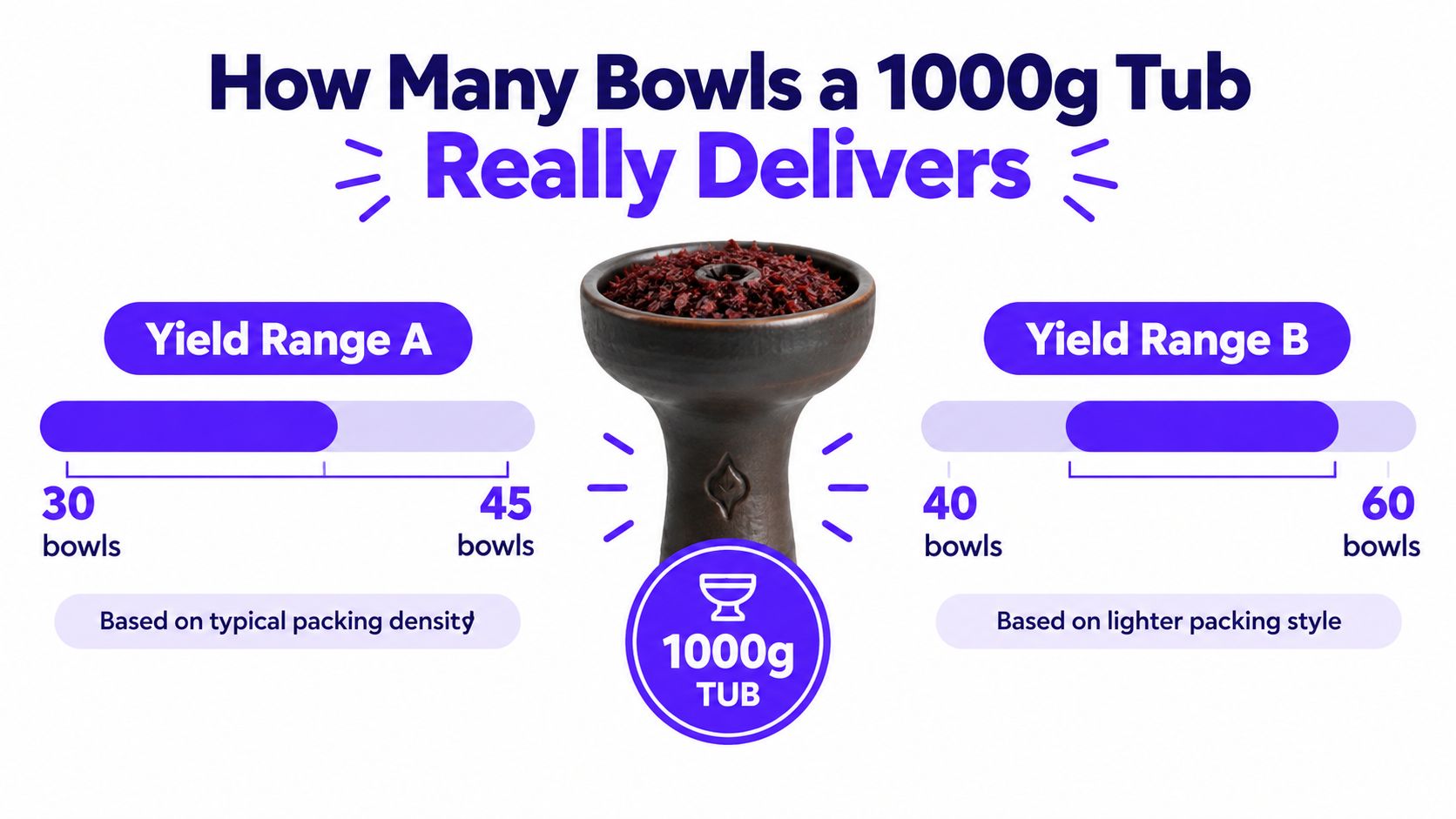
Run your own math before you order. A 15g bowl converts a kilogram to about 67 bowls before handling loss; 20g gives 50; 25g gives 40. Use these as arithmetic examples, then replace them with the bowl weight your staff packs.
Turn yield into a receiving and cost check
Weigh three sample bowls at intake and record the average. Divide your landed unit cost by that realistic bowl count to get cost per session, not by the highest estimate on a product page. A lounge running dense phunnel packs should budget near its observed count; a lighter packer will see more sessions. Home users should subtract product lost to trimming, spills, and drying after the seal is broken.
Recheck yield after the first week. If the tub dries or staff change the pack, your reorder point changes with it.
Recommended Set-Ups for a 1kg Tub
A consistent packing routine makes bulk stock easier to manage because it gives your staff a repeatable session and a more dependable yield estimate. Start with a clean bowl and fluff the tobacco before packing. Avoid compressing it heavily; dense packing can restrict airflow and make heat management less forgiving.
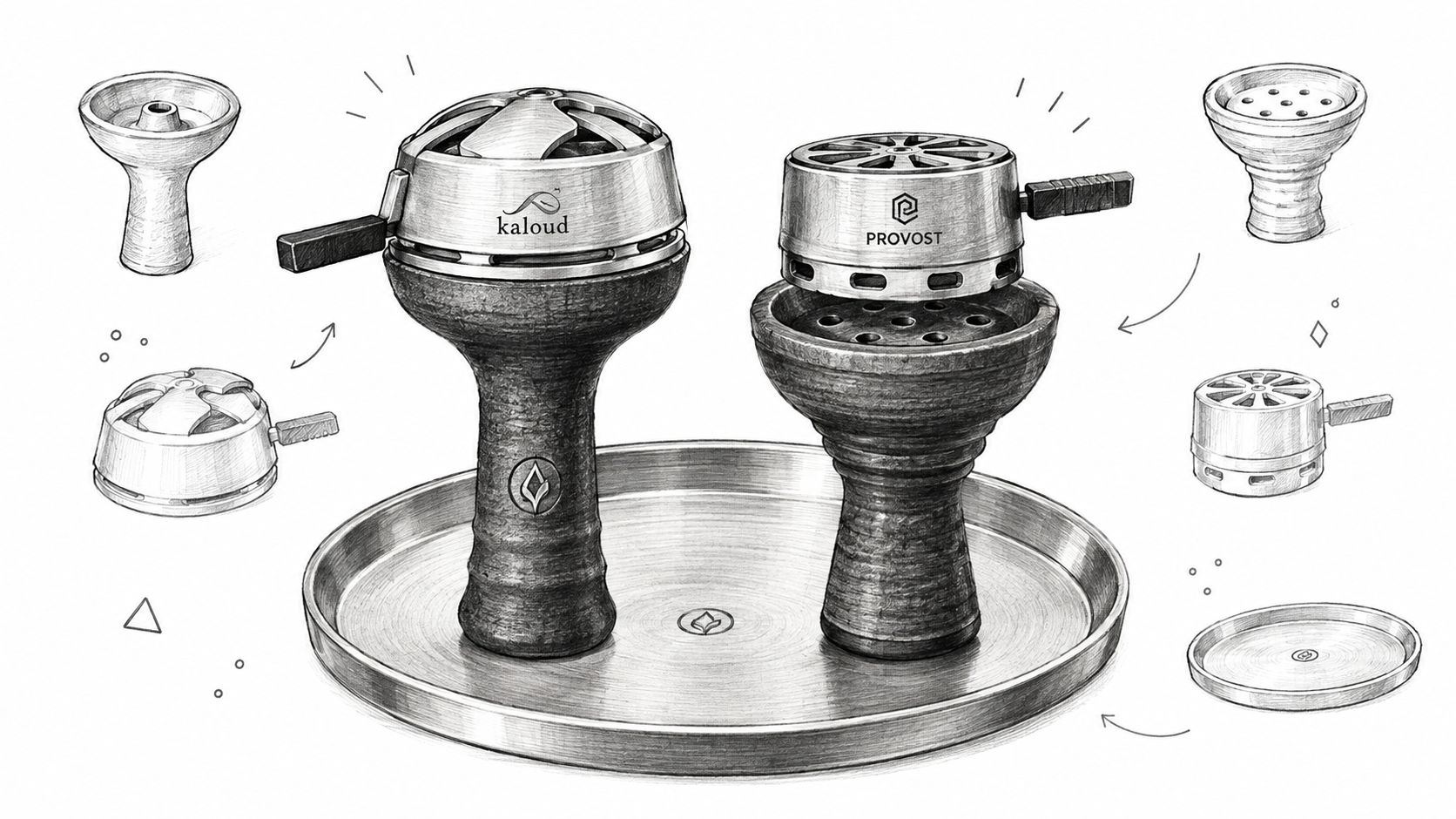
For a default setup, use a bowl and heat-management device that fit together securely, then adjust heat gradually rather than loading the session aggressively. A Kaloud Lotus-style HMD or a Provost-style setup can help manage heat without relying only on foil. Pair the setup with natural coconut charcoal, such as Coco Fuego or Golden River, where available.
If a session tastes harsh, reduce heat or improve airflow before adding more charcoal. If flavor fades quickly, check the packing and coal placement rather than assuming the tobacco is defective. Al Fakher's moisture and cut can vary by flavor and package, so learn the behavior of the actual tub you're serving.
Practical rule: Keep one staff-approved default setup, then record changes when a flavor needs a different heat balance. Consistency helps you identify whether a problem comes from the product, the bowl, or the preparation.
Storage and Shelf-Life Practices
Protect the seal first. Keep unopened tubs sealed, away from heat and direct sunlight, and use a first-expire/first-out rotation so older stock doesn't get stranded behind fresh deliveries. Don't rely on a single assumed shelf-life period across flavors and markets; follow the package and lot information.
Once a tub is open, reseal it immediately after use. Keep the working area clean and use separate tools for different flavors to reduce cross-contamination. If you portion product for service or storage, use airtight, food-safe containers and retain the original label and lot details with the portions.
Make the stock traceable
For a lounge, record the product name, lot information, and date opened in your inventory system. A home user can write the opening date on the container. These habits make it easier to identify which unit is in service and to use older open stock before newer tubs.
Portioning can make a kilogram easier to manage, but it doesn't remove the need to preserve original labeling information. Keep the manufacturer's package details accessible, and don't move tobacco into unmarked containers that staff could mistake for another flavor or lot.
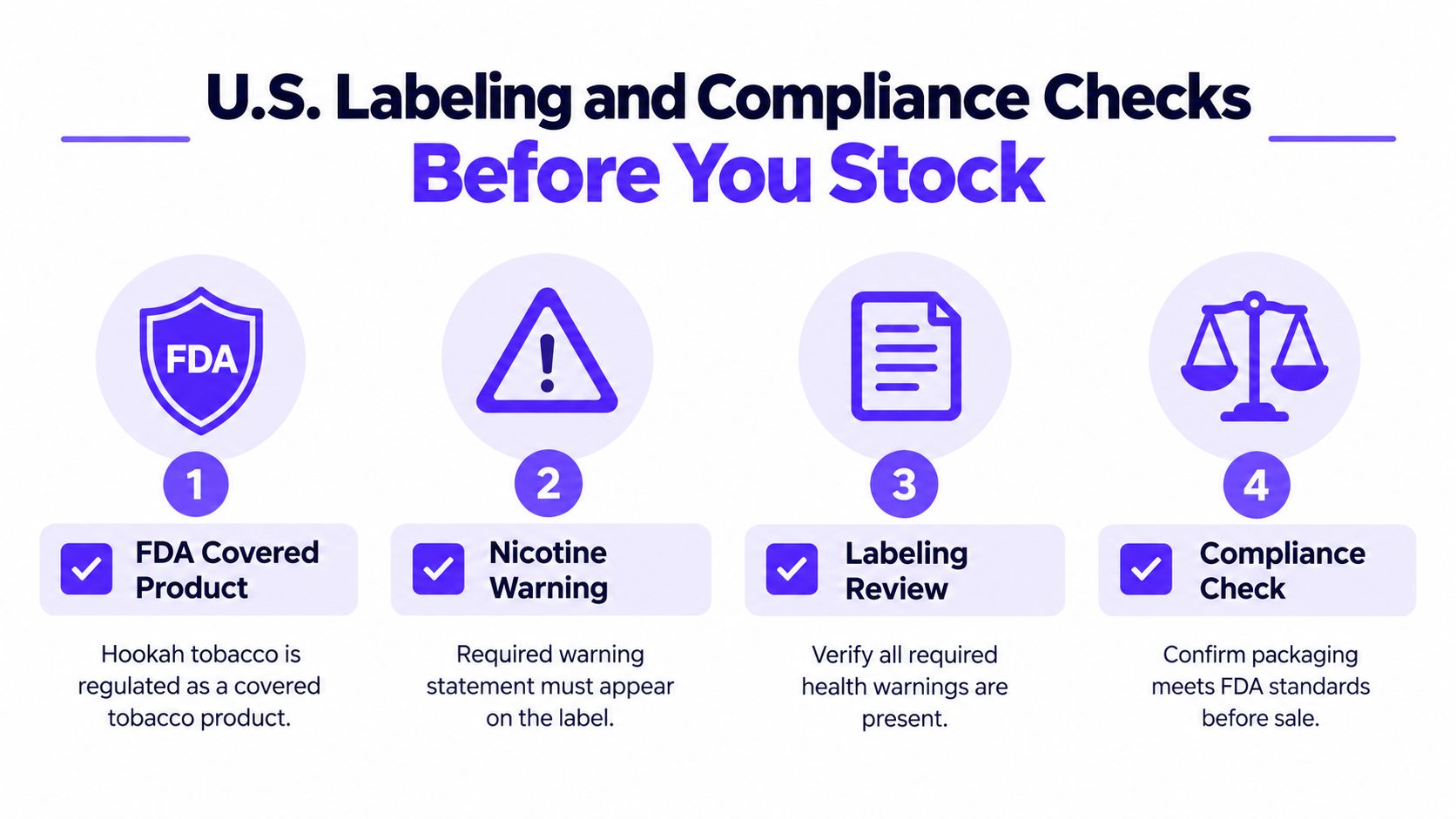
U.S. Labeling and Compliance Checks Before You Stock
Hookah and waterpipe tobacco is a covered tobacco product under FDA rules. A familiar brand name doesn't prove that a particular package meets U.S. labeling requirements. FDA enforcement records have specifically identified Al Fakher products sold without the required warning, so inspect each shipment rather than assuming the package is compliant because the product is well known. FDA enforcement record involving Al Fakher products
Inspect the package before listing or shipping
The nicotine warning must state “WARNING: This product contains nicotine. Nicotine is an addictive chemical.” It must appear on the two principal display panels, occupy at least 30% of each panel, remain conspicuous and visible beneath clear wrapping, and use at least 12-point type under the cited federal requirements. FDA labeling guidance for covered tobacco products
Check the rest of the package as well. Confirm the manufacturer, packer, or distributor's name and place of business; accurate net contents; and domestic-versus-foreign tobacco percentages. Before you list or ship the unit, confirm that you can support its origin and supply chain with the relevant invoice and import or state-tax documentation.
A foreign-market tub may not automatically meet U.S. requirements. If the warning or required package information is missing, obscured, or inconsistent, don't treat the product as ready for resale. Hold it for review, contact your supplier, and keep records of the shipment and the action you took.
Wholesale Sizing and Business Accounts
Ask for the case specification before the price. A quote that skips tubs per master case, total case weight, freight terms, and damaged-unit policy is still incomplete. Get those details in writing, then compare the landed cost per tub against the pace your team can sell and store.
Connect that case count to bowl math before you commit. Use your lounge's real pack weight, not the lightest bowl anyone can stretch from a kilogram, and multiply expected bowls per tub by the case quantity. If the result covers more service volume than your recent demand supports, split the order or choose the smaller format.
Shop Hookah Tobacco lists hookah tobacco, equipment, charcoal, and related supplies and maintains a Business Accounts pathway for wholesale procurement. Use that channel to request current case configuration, case pricing, lead time, and the documents needed for receiving records. Confirm the account terms before the first purchase order, not after a pallet is already in the stockroom.
Stage the first reorder. Keep one SKU's initial case small enough to prove rotation, label condition on arrival, and how fast opened tubs move once they enter service. When the invoice, lot details, and serving math line up, increase the order with confidence.
Buying-Day Checklist and Common Questions
Run this receiving checklist on every Al Fakher 1kg delivery, before any tub leaves the stockroom:
- Inspect the seal: The original packaging should arrive intact. Keep the label and lot information with your receiving file.
- Review the warning: Confirm the required nicotine statement is present, correctly placed, visible, and properly sized on both principal display panels.
- Verify package details: Check net contents and the manufacturer, packer, or distributor information printed on the tub.
- Confirm the paperwork: File the invoice and any import or state-tax documentation with the receiving record.
- Plan the opening: Assign a date-opened record and set a resealing or portioning routine before the tub enters service.
- Check the order size: Compare the delivery against your sales pace, storage capacity, and your own bowl-yield records, not the invoice total.
Common questions
How long does an opened tub last? No single shelf-life answer fits every flavor or package. Reseal promptly, store away from heat and direct sunlight, and go by the product's label and lot information.
Can a familiar brand still be noncompliant? Yes. Brand recognition is no substitute for checking the actual U.S. package and its required information. Skip this check once and you carry the risk, not the supplier.
When should I choose a kilogram instead of 500g? Pick the larger format when demand is steady and your team can store and rotate it properly. A flavor new to your customers earns the smaller tub first.
Do collaboration flavors need different storage? The collaboration name changes nothing about storage. Keep the product sealed, avoid cross-contamination, and preserve the original label and lot details.
Shop Hookah Tobacco carries the Al Fakher line alongside hookahs, charcoal, and accessories, and its Business Accounts channel handles bulk purchasing, as noted earlier. Order the size your customers can turn over, then hold every tub's label and paperwork to the checklist above before it reaches your shelf.