































Charcoal three kings. Master your hookah sessions with Three Kings charcoal. Explore burn times, safety tips, size comparisons, and expert setup advice
You've packed the bowl, filled the base, and you're ready for a short session. Then you remember the charcoal. Natural coals need proper heating before they're ready, which can turn a spontaneous smoke into a waiting exercise. Three Kings charcoal earns its place here: it gives you a practical way to get heat onto the bowl without building your entire setup around a long preparation routine.
Quick-light charcoal isn't automatically the right choice for every session. Its value depends on how you light it, which disc size you choose, how you arrange it, and how closely you manage airflow. Used carelessly, it can make a bowl harsh. Used deliberately, it becomes a precise convenience tool for short sessions, travel setups, and situations where immediate heat matters more than maximum duration.
Table of Contents
Why Three Kings Charcoal Remains a Hookah Staple
Three Kings has a history that extends well beyond modern shisha retail. The company was founded in 1936 in Kerkrade, Netherlands, by René Schönefeld, and its own account describes an evolution from incense production toward charcoal manufacturing. After the Koster family takeover in 1983, production later moved to a larger factory in Bladel. The brand says its charcoal is now sold in more than 90 countries worldwide, an unusually broad reach for a specialist hookah-accessory manufacturer. Those details are documented in Three Kings' company history.
That longevity matters at the bowl. A familiar brand gives lounges, retailers, and regular smokers a predictable reference point. You still need to manage the product correctly, but you're not starting with an unknown disc that behaves differently from one batch or format to the next.
Convenience is the product
The main appeal is straightforward. You can take a Three Kings disc, apply an open flame, and get it moving without setting up a dedicated electric burner for a natural coal routine. That makes the format useful for:
- Short home sessions: You can prepare one bowl without committing to a longer heating process.
- Outdoor setups: A lighter and a stable, fire-safe surface are easier to transport than a full burner arrangement.
- Lounge contingencies: Quick-light discs can provide a practical backup when the normal coal workflow is interrupted.
- Travel and events: The compact format suits setups where equipment, time, or power is limited.
The convenience comes with a condition. The disc is only ready when the initial ignition stage has finished and the surface has developed a white-grey ash coating. Putting it on the bowl while the ignition layer is still active is the fastest way to introduce unwanted taste and unstable heat.
Practical rule: Quick-light charcoal saves preparation time, not attention. The first moments after ignition still require supervision.
Three Kings describes its product as odorless, tasteless, low-ash, and designed for a smooth, consistent burn, but those qualities depend on correct use. A disc covered in ash and placed with suitable spacing can support a clean session. A half-lit disc dropped directly over the center of a small bowl can overwhelm the tobacco before you've taken a proper draw.
That distinction explains why the product remains a staple without being a universal solution. It solves the preparation problem particularly well. It doesn't remove the need to match heat to the bowl, tobacco, airflow, and session length.
The Science Behind the Quick-Light Formula
Three Kings says its charcoal is made in the Netherlands from untreated, natural beech wood sourced from sustainable forestry. The wood is pre-burned in low-oxygen conditions, leaving a residue the company describes as almost pure carbon. That carbon base is formed into discs, creating a fuel that can provide steady heat after the ignition stage has ended. The manufacturer's explanation of its materials and production appears in Three Kings' ingredients information.
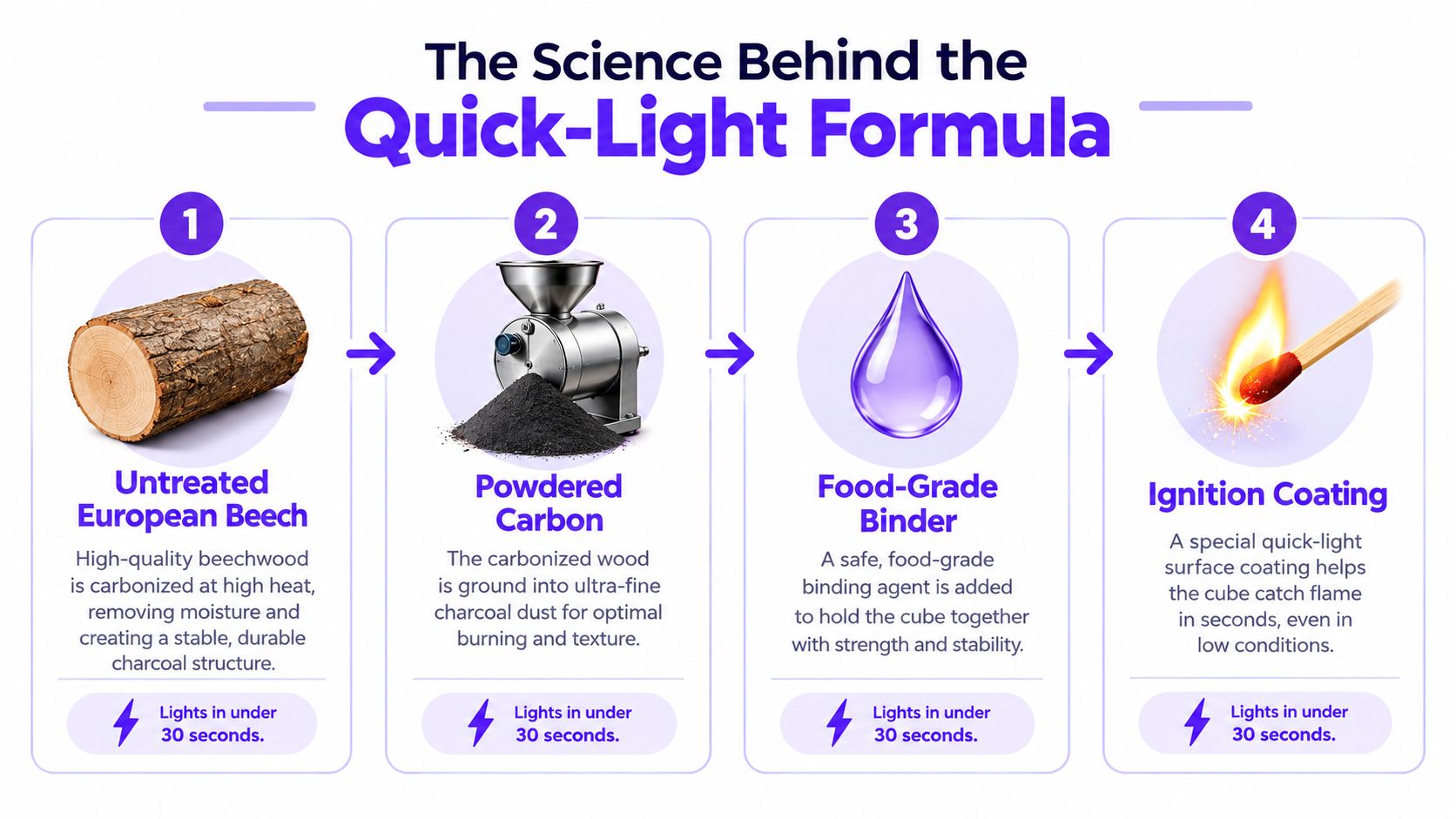
The term quick-light describes the ignition system, not a different meaning of heat. The disc contains a surface treatment that catches an open flame quickly. Industry coverage describes quick-light discs as using a chemical accelerant to make simple-lighter ignition possible, which is the reason the first stage looks and behaves differently from a natural coconut coal.
What happens after the flame
When you light the disc, the visible reaction spreads across the surface. You may see sparks, hear crackling, or notice a sharper smell than you'll experience later in the session. That initial activity is not the point at which the charcoal belongs on the bowl.
Use metal tongs to rotate the disc carefully and expose any dark sections. Keep it on a non-combustible, heat-resistant surface while the ignition progresses. Wait until the disc is glowing and covered with a white-grey ash layer, following the manufacturer's preparation guidance rather than relying only on the clock.
This waiting period protects flavor in two ways. First, it allows the ignition coating to burn through before the disc sits above the tobacco. Second, it gives the carbon body time to establish a more even heat pattern. A disc that looks active on one side but remains dark on the other can create a hot spot, forcing you to compensate with constant repositioning.
Why the first draw can go wrong
A harsh opening draw isn't always caused by the tobacco or the bowl pack. It can come from a disc placed too early, too much surface area positioned over the center, or an aggressive airflow pattern that pushes heat into one section of the bowl.
Three Kings describes its tabs as odorless and tasteless during normal use, but that claim assumes the product has reached its intended burning state. The practical interpretation is simple: treat the ignition phase as preparation, not smoking time. Once the disc is evenly lit and ash-covered, arrange it for controlled heat instead of chasing immediate clouds.
Choosing Between 33mm and 40mm Disc Sizes
A small bowl packed for a short solo smoke can turn harsh quickly under an oversized coal. A larger bowl shared by several people may cool before the session is finished with a smaller disc. Three Kings offers disc-shaped quick-light briquettes in 33 mm and 40 mm diameters. The smaller format is stated to burn for about 20 to 30 minutes, while the larger format is intended for longer sessions, according to the manufacturer's quick-light charcoal product information.
Disc size controls more than the time between relights. A 40mm disc presents more heated surface and delivers a broader heat load. That suits a bowl requiring sustained warmth, while a compact bowl or heat-sensitive tobacco may become overloaded if the coal sits too close to the center. Airflow changes the result as well. Stronger draws pull more air through the bowl and can make a large disc feel hotter than its position suggests.
Use the 33mm disc for control
The 33mm format is generally the more forgiving starting point for a smaller bowl or a short personal session. Its shorter stated burn window fits a focused smoke, where maintaining heat for a long group gathering is unnecessary.
Set the disc toward the outer edge of the foil or bowl rim. Edge placement lets heat travel inward gradually and leaves room to correct the session through draw strength and coal position. If the flavor remains weak after the bowl warms, shift the disc slightly inward. If the tobacco tastes sharp or dry, move it back toward the edge or lift it briefly with tongs.
The 33mm format is useful when:
- The bowl is compact: Less heated area lowers the chance of saturating a small tobacco load.
- The tobacco reacts quickly: A smaller heat source gives you more time to correct the setup before the flavor turns harsh.
- The session is brief: The stated burn window fits a quick solo smoke.
- You're learning the setup: A lower initial heat load makes the bowl's response easier to diagnose than an oversized disc.
Use the 40mm disc for sustained heat
Choose the 40mm disc when the bowl and session can absorb a larger heat load. Its design suits longer sessions, a larger bowl, a group setup, or a pack that needs continued heat after the opening phase.
Give the disc room to breathe around the perimeter, then adjust its exposed area as the bowl responds. A 40mm coal placed flat over the center can overwhelm the tobacco, especially when repeated strong draws increase airflow. If a heat-management device is involved, confirm that it can accommodate the disc without restricting airflow or creating unsafe contact.
| Feature | 33mm Disc | 40mm Disc |
|---|---|---|
| Best starting use | Shorter personal sessions and smaller bowls | Longer sessions and larger heat demands |
| Stated burn window | About 20 to 30 minutes, according to Three Kings' product specifications | Designed for longer sessions than the 33mm format |
| Heat approach | Easier to moderate with edge placement | More sustained heat requires closer monitoring |
| Useful correction | Move inward gradually if the bowl feels underheated | Keep toward the edge or reduce exposure if the bowl runs hot |
| Main risk | A weak session if the bowl needs more sustained heat | Harshness if the disc is oversized for the bowl |
Size-selection insight: Match the disc to the bowl's heat tolerance, session length, and the cloud quality you can sustain throughout the session.
A 40mm disc cannot compensate for a poorly packed bowl. A 33mm disc may run out of heat before a setup designed for longer use has finished. Match the format to the bowl first, then use placement and draw strength to preserve flavor while maintaining the heat you need.
Mastering Heat Management and Airflow Control
Once the disc has developed an even white-grey ash coating, heat distribution becomes the decisive factor in session quality. Place it at the bowl's outer edge first. With foil, this keeps direct heat away from the center while the tobacco warms gradually. With an HMD, use the position allowed by the device's design and leave enough space for air to circulate instead of sealing the top completely.
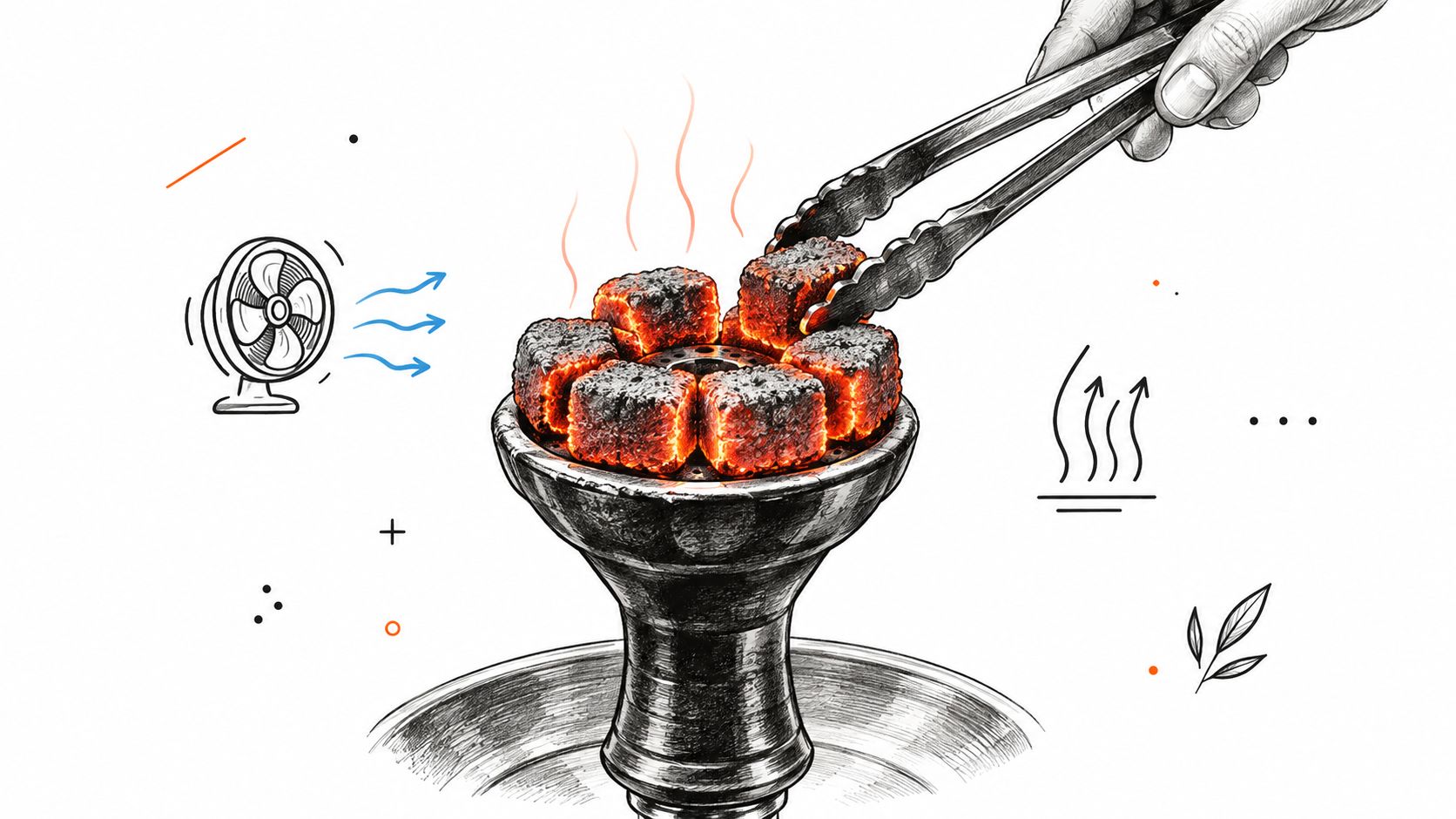
Take a few gentle draws and give the bowl time to respond. Repeated forceful pulls increase airflow through the bowl, accelerate the charcoal's burn, and can push heat into the tobacco faster than the flavor can develop. If the smoke turns hot or the flavor loses definition, pause briefly and move the disc farther outward.
A practical operating sequence:
- Light the disc away from the bowl. Rotate it with tongs so the ignition spreads across the surface.
- Wait for an even white-grey ash coating. Dark areas show that the disc still needs time.
- Start at the perimeter. Keep the hottest area away from the most sensitive part of the bowl.
- Take measured draws. Let the tobacco respond before changing the heat.
- Adjust one variable at a time. Move the coal before changing the pack or water level.
- Clear excess ash carefully. A heavy layer can restrict airflow and make the disc seem weaker than it is.
Disc size changes how quickly the setup reaches working temperature and how much correction remains available. A 33mm disc usually gives a smaller bowl more manageable heat, while a 40mm disc demands closer attention because its larger surface can overwhelm a sensitive pack. Start the larger format farther toward the edge, then expose more of it only when the bowl remains underheated. The right choice depends on the bowl's heat tolerance, the session length, and the flavor intensity you want to preserve.
Airflow can change the session
An open-draw hookah feeds the bowl differently from a restricted setup. Frequent draws move more air across the charcoal, which can alter burn speed and heat transfer. Quick-light charcoal is designed to settle into a smooth burn, but usable heat still depends on disc size, placement, and airflow, as explained in Three Kings' charcoal guidance.
A wind cover can help outdoors by shielding the disc from moving air and retaining heat. Indoors, it does not replace ventilation or supervision. If the coal seems to lose heat, check its ash layer and position before adding another disc. A shifted coal can create the same symptom as insufficient fuel.
This video provides a visual reference for handling and placing hookah charcoal:
Know when to intervene
Experienced lounge staff correct the setup before harshness becomes the session's dominant flavor. Move the disc outward at the first sign of a sharp draw. If the bowl is warm but the flavor is thin, shift the disc slightly inward rather than adding a second heat source. If loose ash covers the disc, tap it gently over a dedicated ash tray with tongs.
Heat-management rule: Correct position before increasing fuel. More charcoal is rarely the first answer to a weak draw.
Record which disc position produces the cleanest draw for each tobacco type, and keep a short note for future sessions.
Safety Protocols and Indoor Ventilation Best Practices
Quick-light charcoal deserves a more careful safety conversation than “it lights fast.” The ignition coating is the feature that makes the disc convenient, and it's also why you shouldn't treat a sparking, partially lit coal as ready for the bowl.

Ventilation comes before flavor
Use charcoal in a space with active ventilation. A cracked window, working exhaust system, or suitable airflow helps prevent the room from becoming saturated with combustion byproducts. This matters in small homes, private rooms, and busy lounges where several heat sources may operate close together.
Never use the initial ignition stage as an indoor air-quality test. Light the disc in a controlled area, keep people away from sparks, and wait until the ignition has finished. The manufacturer's guidance is to use the coal only once it's fully lit and covered in white-grey ash.
A few habits should be essential:
- Keep the coal attended: Don't leave a lit disc on a bowl or burner without someone responsible nearby.
- Use metal tongs: Fingers, wooden tools, and improvised utensils don't provide the same distance or control.
- Protect the surface: Put the disc on a purpose-built burner, ash tray, or other non-combustible surface.
- Keep combustibles away: Paper, fabric, packaging, and furniture can catch from radiant heat or falling embers.
- Dispose of ash properly: Treat ash and spent discs as hot until they've cooled completely.
- Maintain room airflow: A hookah lounge should manage ventilation as part of normal service, not only after a guest notices irritation.
Don't confuse lack of smell with lack of risk
A coal can appear clean once the surface is ash-covered, but that doesn't make ventilation optional. “Odorless” describes the intended sensory profile of the finished burn. It isn't a guarantee that a closed room is suitable for charcoal use.
If the room feels stuffy, if several people develop irritation, or if the setup is producing an unusual smell, pause the session and improve airflow. Don't mask the problem with extra flavor, a fan pointed directly at the bowl, or another disc.
A dedicated coal burner is still useful for regular users, even when quick-light charcoal is the main choice. It provides a stable preparation area and a controlled backup for situations where a lighter doesn't ignite the disc evenly. For lounge operators, a clear coal-handling station also reduces rushed movements around guests and makes disposal easier to manage.
When to Choose Quick-Light Over Natural Coconut Coals
A short outdoor bowl, a guest arriving between lounge reservations, or a travel kit without an electric burner can make Three Kings quick-light charcoal the sensible choice. Natural coconut coals suit a different session: longer, slower, and supported by equipment that can prepare and hold them consistently. The choice depends on session conditions, time pressure, portability needs, and available equipment, not on a hierarchy of charcoal quality.
Quick-light charcoal fits short, flexible sessions
Choose Three Kings when the bowl has a clear endpoint or the setup needs to stay compact. A disc can serve a spontaneous solo session, temporary outdoor use, travel, or a lounge that needs a dependable alternative while its regular coal station is occupied. It also avoids running a burner for one small bowl.
The practical advantages are specific:
- Limited power access: Outdoor and temporary setups may not support an electric burner.
- Short service windows: A shorter-burning format can reduce unused charcoal after the guest leaves.
- Fast station turnover: Staff can prepare another bowl without tying up the natural-coal heating workflow.
- Compact storage: Discs, tongs, foil, and an appropriate ignition surface fit easily into a mobile kit.
- Controlled heat choices: Selecting a 33mm or 40mm disc lets the operator match heat demand to the bowl instead of using the same format by habit.
Quick-light charcoal also carries a cost trade-off. The lower equipment burden and reduced preparation time can matter more than the coal's purchase price for occasional users or busy service periods. For frequent, long sessions, natural coconut coals may make better use of the burner and supply because their heat lasts longer. Compare the complete session cost, including electricity, staff time, unused coal, and relights, rather than judging the bag price alone.
Natural coconut charcoal suits longer appointments
Natural coconut coals generally fit extended group sessions, larger bowls, and service where steady heat matters more than immediate availability. They require a dedicated heating process and storage space, so they are inconvenient for a last-minute bowl. Once ready, their longer heat curve can support a slower session with fewer interruptions and more room for gradual adjustment.
Flavor expectations can also decide the format. Some smokers prefer natural coconut charcoal because they want less sensory difference from quick-light ignition. Others accept that trade-off for a short, convenient bowl. The right choice depends on how much preparation the session can support and how sensitive the smoker is to changes in flavor.
Use a mixed inventory in lounge service
Lounge operators can serve both preferences without forcing every guest into one charcoal workflow. Keep Three Kings available for quick appointments, outdoor service, equipment outages, and guests who value convenience. Reserve natural coconut charcoal for longer bookings and bowls that benefit from a sustained heat supply.
A useful service framework is:
- Identify the appointment: Short solo use favors quick-light, while extended social service favors natural coconut.
- Check the equipment: Choose the format that fits the available burner, workspace, and transport setup.
- Match the disc to the bowl: Use 33mm for a lighter heat demand and 40mm when the bowl and heat-management setup can accept more output.
- Account for the room: Airflow and safe coal handling remain part of the operating setup for either format.
- Set expectations: Quick-light charcoal is a practical service tool, while natural coconut is better suited to a prepared, longer session.
Three Kings charcoal listings at Hookah.com place the brand among formats that include natural alternatives. Shop Hookah Tobacco also carries Three Kings charcoal alongside hookahs, bowls, burners, heat-management devices, foil, tongs, and other hookah supplies.
The useful question is which format fits the bowl, the room, and the time available today. Clear expectations and deliberate heat choices usually matter more than choosing one charcoal type for every session.