




















Box of coals for hookah explained: pieces per box, natural vs quick-light coal, safe storage, and how to buy by the case for wholesale.
What if the weight printed on a box of coals looked like the whole decision, and still left out the numbers that change a session? Piece count, carbon monoxide, and bowl heat all move together. Charcoal type sets how much gas a session throws off, how hot the tobacco gets, and how many pieces belong on the bowl. Those choices then decide where an unopened carton can sit and how much risk a small room or a busy lounge takes on. A sealed retail pack is fuel, not a snack. No charcoal is safe to burn. Every coal produces carbon monoxide and other hazardous compounds, so the useful question is which fuel, which count, and which room.
Table of Contents
Box Sizes, Types and Pieces per Box
A box of coals is a sealed retail pack of hookah charcoal, usually sold by weight. The piece count is not fixed by the box. It follows the type and the size of each piece.
Two types cover almost every shelf. Natural coconut cubes are pressed coconut-shell charcoal. Quick-light briquettes are round coals treated so they catch from a lighter. Shape and weight change both the count in the carton and the starting count on a bowl.
| Type | Typical shape and size | Piece weight | Pieces per bowl (start) | Pieces per box |
|---|---|---|---|---|
| Natural coconut cube | Square cube | Check label or weigh one piece | 2–3 | Box weight ÷ piece weight |
| Quick-light briquette | Round, about 40 mm | 9–10 g in a controlled study | 1–2 | About 100–111 in a 1 kg box |
The count is a division problem
Work the quick-light row as a carton of eggs. The label gives total weight. Egg size decides how many eggs you end up with. Say the box is 1 kg and each briquette is 9–10 g. Divide 1,000 g by 10 g and you get 100 pieces. Divide 1,000 g by 9 g and you get about 111. The same carton can hold roughly 100–110 pieces because the pieces aren't identical.
When a listing gives weight and no piece count, don't guess from the photo.
- Put one coal on a kitchen scale and note the grams.
- Convert the box weight to grams. One kilogram is 1,000 g.
- Divide box weight by that one-piece weight.
- Repeat with a second piece if the cubes look uneven, then use the heavier figure so you don't overstate the count.
Practical rule: Start at the low end of the bowl range, 2 natural cubes or 1 quick-light briquette, and add a piece only if the tobacco stays cool.
More pieces, or larger pieces, add heat. A third cube is not a free upgrade. It is a hotter bowl, and a hotter bowl scorches tobacco the same way an extra burner ring scorches a pan.
Natural Versus Quick-Light Coals in Numbers
In a controlled 90-minute hookah-charcoal study indexed by the WHO FCTC knowledge hub, a 9–10 g quick-light briquette produced a mean carbon monoxide concentration of 3,728 ± 2,028 ppm, versus 1,730 ± 501 ppm for natural charcoal. That gap was statistically significant (p = 0.016). Quick-light output was more than double.
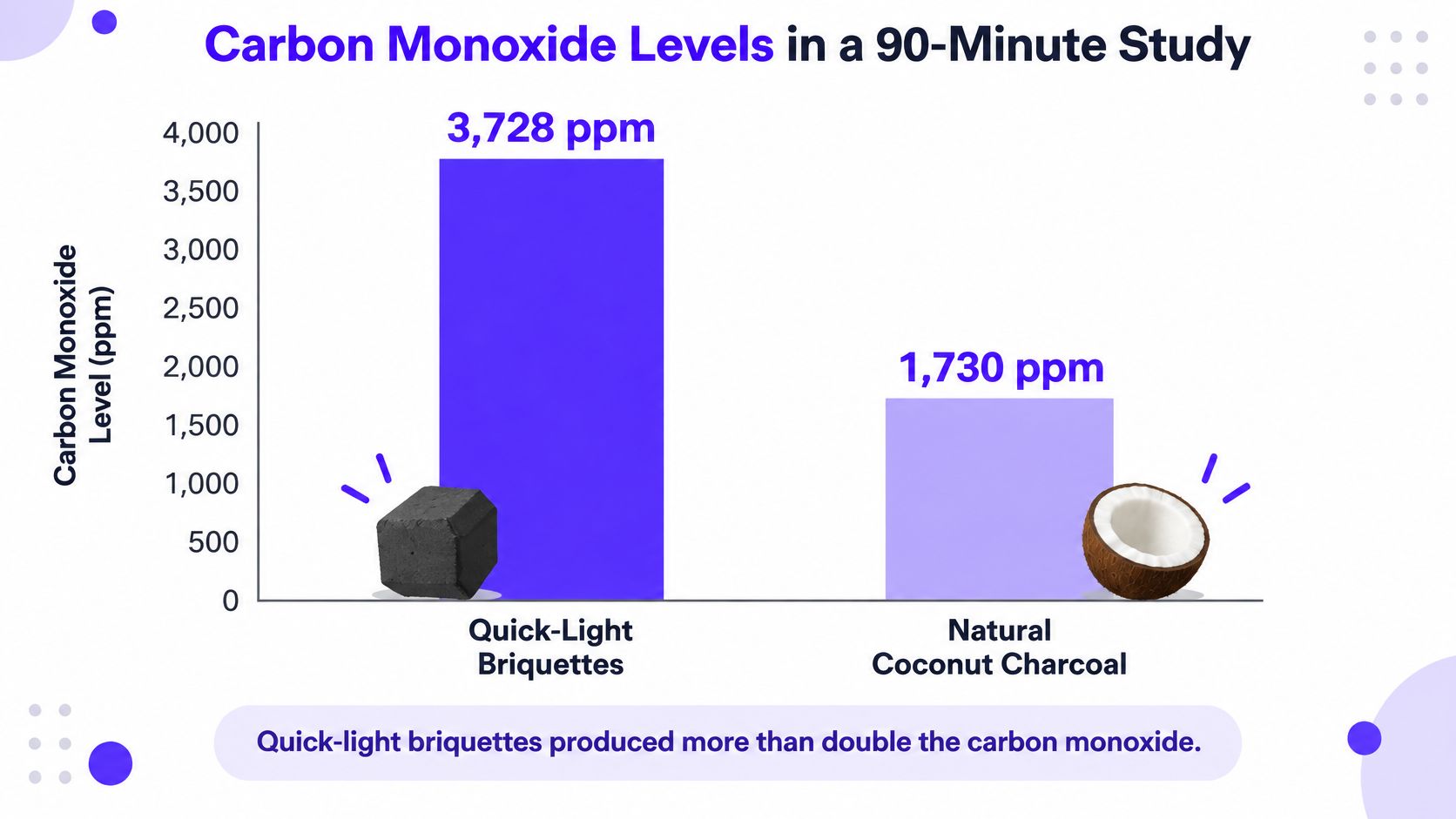
The same test separates average gas, peak gas, and heat. Read the rows as a buying sheet, not a safety certificate.
| Measure | Natural coconut | Quick-light briquette |
|---|---|---|
| Mean CO over 90 minutes | 1,730 ± 501 ppm | 3,728 ± 2,028 ppm |
| Peak CO and when it occurs | 2,627 ± 422 ppm at 6 minutes | 6,424 ± 1,042 ppm at 27 minutes |
| Mean charcoal temperature | 292 ± 87 °C | 247 ± 92 °C |
| Temperature just after ignition | About 435–443 °C | About 435–443 °C |
| Ignition speed | Slower, needs more lead time | Faster, simpler start |
Heat and the clock don't move together
Both types hit about 435–443 °C right after lighting, then fell. Across the session, natural charcoal averaged 292 ± 87 °C and quick-light averaged 247 ± 92 °C. Natural held more bowl heat. Quick-light was the easier start and the heavier gas load.
Think of quick-light as a match, bright and fast, and natural charcoal as a log that sulks at first and then keeps its warmth. Timing matters as much as the average. Natural charcoal peaked early, 2,627 ± 422 ppm at 6 minutes. Quick-light peaked later and higher, 6,424 ± 1,042 ppm at 27 minutes, so its worst carbon monoxide period lands in the middle of a typical session, not at the strike of the lighter.
Lower carbon monoxide is not the same as safe. This is one controlled test, and all charcoal combustion still produces carbon monoxide and other hazardous compounds.
Packaging should name the type, because quick-light can simplify ignition and still create greater, more sustained carbon monoxide through the early and middle part of a session. Indoor users need strong ventilation, and coals should never be burned in an enclosed area.
Storing Unopened and Partly Used Boxes
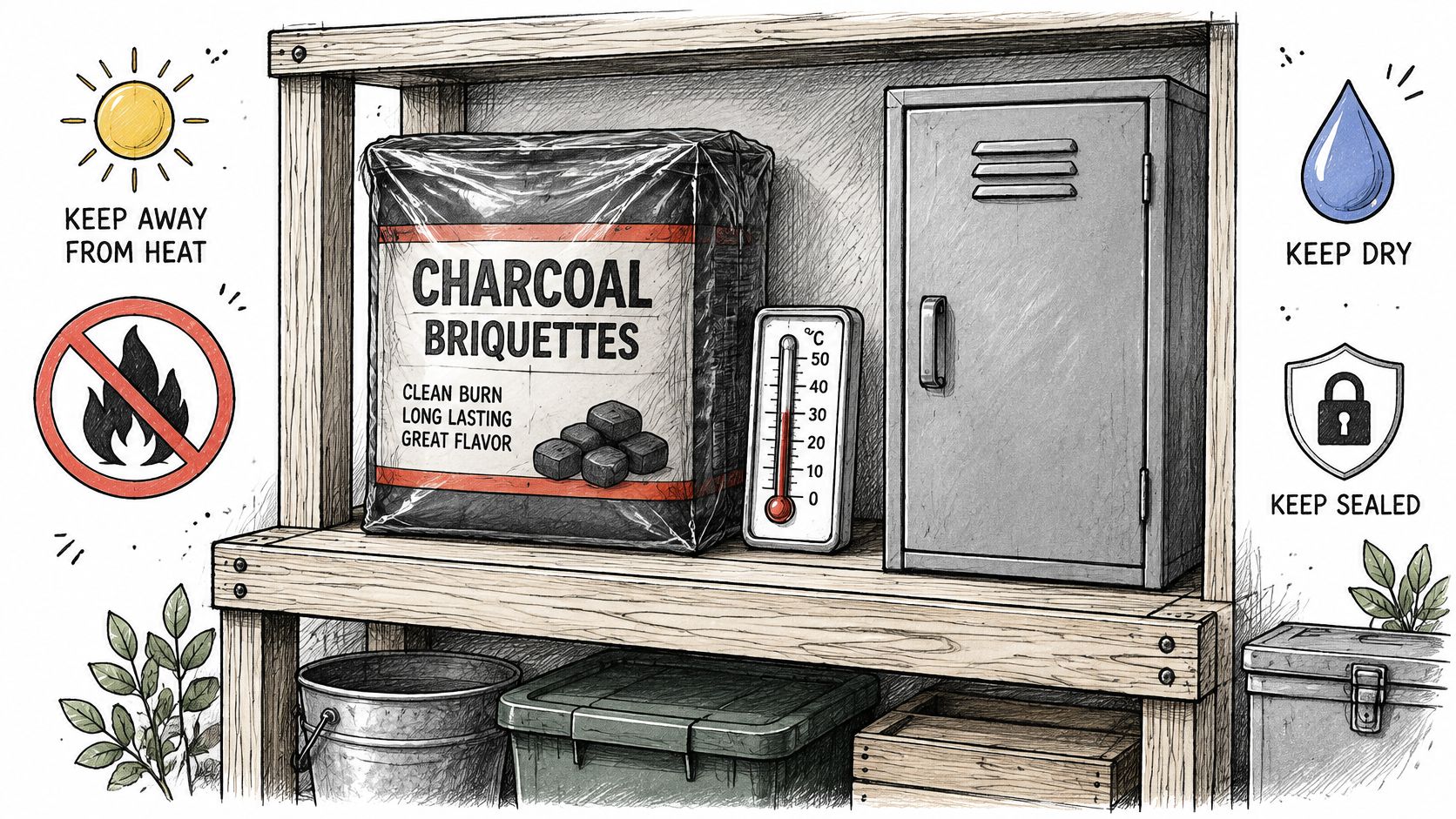
Keep every box of coals dry, sealed, and away from heat. Moisture ruins ignition. Heat turns a storage shelf into a fire problem. An opened carton behaves like an opened bag of grill fuel left on a porch. It is only as good as the seal you put back on it.
A strict code as a benchmark
Local fire rules differ, so check the code where you operate. New York City hookah establishment rules are a clear, strict example of what "away from heat" can mean in practice.
- Distance from heat: Hookah coal must be stored at least three feet from heating equipment.
- Banned spots: Storage goes below neither an oven nor a flue.
- The container: Coals go inside a noncombustible cabinet or container with a secure lid.
- Alarms: Carbon monoxide alarms are required wherever coals are prepared or maintained, and in smoking areas.
- Spent coals: Extinguish them in a heatproof container and cover them with water. Don't throw them out while they're hot.
A routine you can run on delivery day
Inspect each delivery before it hits the shelf. Crushed corners, damp cardboard, and torn inner seals are reasons to quarantine that carton, not to mix it with dry stock. Rotate first in, first out, so an older box doesn't sit behind a fresh one until the cubes take on humidity. Keep coals away from tobacco, paper goods, and anything else that can burn. A partly used box goes back into a rigid container with the lid snapped shut. A folded flap is not a seal.
Venue layout, how much coal you hold, room size, and how long people stay in that room all change the risk. Product quality is only one piece. A dry cabinet in a large ventilated room is a different problem from the same carton stacked beside a heater in a small prep closet.
Lighting and Disposing of Coals Safely
Lighting is a procedure with a reason on every step. Skipping the outdoor start, or the water at the end, is how a normal session becomes a carbon monoxide or fire call.
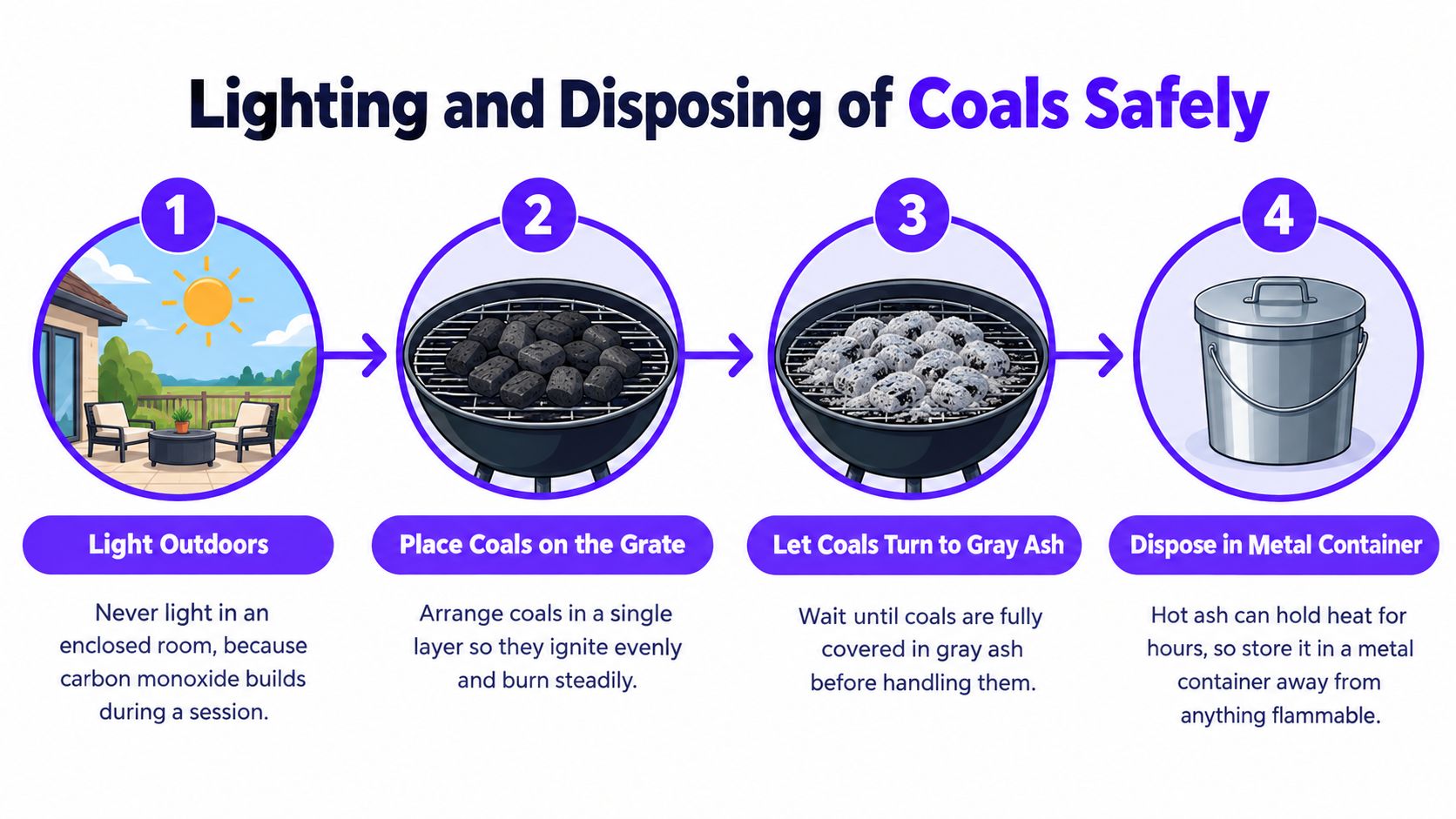
- Light outdoors or in strong ventilation. Carbon monoxide builds while coals burn. Never light them in an enclosed room.
- Set them on a noncombustible surface. A metal grate, a burner tray, or a coil stove works. Keep paper, foil rolls, and curtains clear.
- Follow the product directions for that type. Quick-light pieces are made to catch from a lighter. Natural cubes usually need a coil burner or a dedicated charcoal starter and more lead time.
- Watch the first three minutes. Temperature swings hard in that window, so don't walk off while the coals are still catching.
- Move only ash-covered coals to the bowl. Start with 2–3 natural cubes or 1–2 quick-light pieces. Add one only if the tobacco stays underheated.
- Stay with lit coals. Never leave them unattended, and keep them out of reach of children and pets. Tongs, not fingers.
- At the end, move spent coals into a metal, heatproof container. Ash can hold heat long after it looks gray.
- Cover them with water and leave them until they're fully cool and no longer steaming.
- Then bag the ash and follow local disposal rules. Don't drop hot or warm ash into a bin with paper, cardboard, or other combustible waste.
Carbon monoxide alarms and open ventilation are part of the procedure, not an optional extra you add when a room feels stuffy.
If an alarm sounds, put the session out, move people to fresh air, and don't go back in to "finish the bowl."
Buying Boxes by the Case for Wholesale
Wholesale math starts with three numbers: pieces per box, box weight, and how many boxes sit in a case. The price on the carton is the least useful of the three. The Verified Market Research estimate put the global hookah charcoal market at USD 41.7 million in 2024, which is large enough that lounges and smoke shops buy by the case, and small enough that a bad count on one SKU shows up in the weekly coal bill.
Cost per bowl, not cost per box
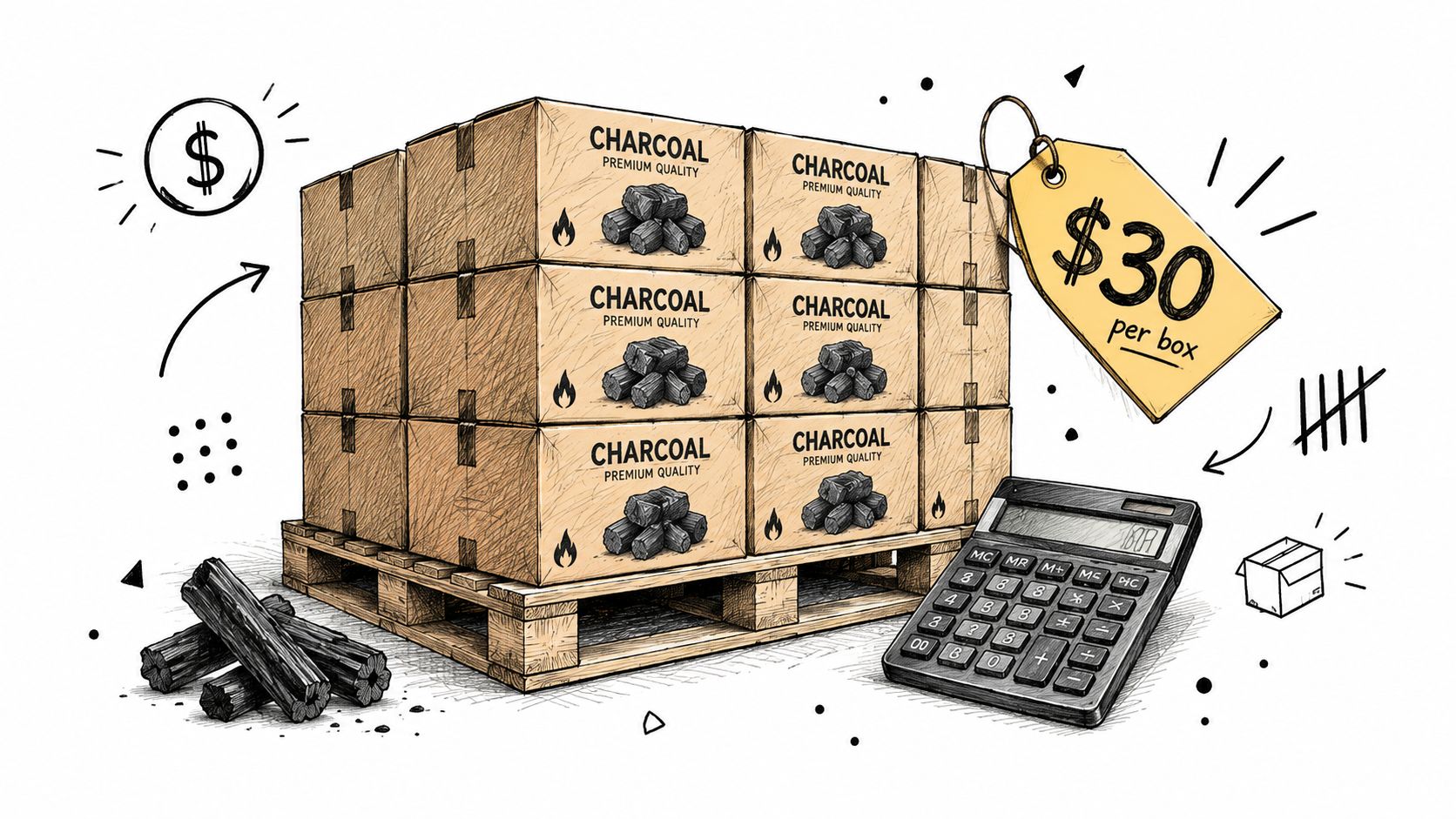
Say a box is $30 and your scale count is 100 pieces. That is $0.30 per piece. At two natural cubes per bowl, the fuel cost is $0.60 per bowl. The same box used as quick-light at one piece per bowl is $0.30 per bowl. At two quick-light pieces it is $0.60 again. A cheaper carton can cost more per bowl when its pieces are heavier, because you get fewer of them and you may still need two on the head.
Run that division before you compare two brands. Write pieces per box on the invoice copy so the next buyer isn't starting from the sticker price.
What to confirm before the pallet lands
- Piece weight and count: Confirm both for each SKU, from the label or from a sample you weigh.
- Mix inside the case: A case that blends natural cubes and quick-light briquettes is two fuels, not one reorder.
- Case quantity and shelf space: Full cases need a dry, noncombustible spot that can hold the whole delivery, not just this week's open box.
- Reorder cadence: Bowls per week times pieces per bowl, divided by pieces per box, tells you how many boxes you end up burning.
- Damage and moisture terms: Crushed or damp deliveries should be replaceable. For an exchange of the same item, email cs@tobaccoimportusa.com.
Compare suppliers on cost per bowl and on a written piece weight. A low box price with no count is a guess.
Matching a Box to Your Setup and Verifying It
Start with the room, not the brand name on the flap. The same natural cube that suits a patio is a different decision in a small indoor sitting room, and a lounge running several hookahs at once is a different decision again.
| Setting | Suggested type | Pieces per bowl to start | Main adjustment |
|---|---|---|---|
| Home, outdoors | Natural coconut | 2–3 | Add or remove one piece to change heat |
| Home, indoors | Natural coconut | 2 | Open ventilation and keep sessions short |
| Lounge with several hookahs | Natural coconut | 2 per bowl | Strong ventilation and CO monitoring |
| Fast turnover in a ventilated space | Quick-light briquette | 1–2 | Expect higher, sustained CO and limit session length |
| Bowl with a heat management device | Natural or quick-light | Start at the low end of the range | Check tobacco heat before adding a piece |
Why the setting picks the fuel
A Duke University record of the same charcoal experiment found a real heat trade-off. Average measured temperature was significantly higher for natural charcoal, 292 ± 87°C, than for quick-light charcoal, 247 ± 92°C (p = 0.013), even though both reached about 435–443°C immediately after ignition. Both types changed sharply within three minutes of lighting, so the startup minutes decide how the tobacco heats.
Natural charcoal gives higher average bowl heat and, in that study, lower measured carbon monoxide than quick-light. It still produces hazardous combustion gases. It needs controlled ignition, a noncombustible surface, and real ventilation. The extra heat helps tobacco warm evenly, and it overheats the bowl if you pile on cubes or leave them stacked in one spot. Quick-light runs cooler on average and is faster to start, with higher and more sustained carbon monoxide, so ventilation and a hard stop on session length decide whether that speed is acceptable. It does not make the briquette safe.
A heat management device spreads heat across the bowl. Copying a bare-foil habit, three cubes under a lid, often scorches the top layer. Test the low end of the range, then add a piece only after you check the tobacco.
Lounges that want quick-light for turn time should set a session limit and a ventilation plan before the first box is opened. Several hookahs multiply the gas in the room even when each bowl looks modest.
Check the listing in this order
- Coal type. Natural and quick-light differ in gas, heat, and how you light them.
- Piece size and weight. Weigh a sample if the page is vague.
- Pieces per box. Divide box weight by piece weight.
- Setting match. Use the table above, including the low-end start under a heat management device.
- Storage. You need dry space and a noncombustible container with a secure lid before the case arrives.
We offer charcoal in coconut and quick-light types, organized by brand, so you can line a listing's piece weight and count up against that sequence instead of shopping by box art. Choose the type and the starting count for the room first. The carton is the last step.
Shop Hookah Tobacco carries hookah charcoal in natural coconut and quick-light types, so you can match a box of coals to your bowl count, your ventilation, and your storage setup instead of buying on weight alone. Browse brands, piece sizes, and case options, then order the fuel that fits the room you use. Visit Shop Hookah Tobacco to compare charcoal and place your order.